Lucknow's Own Masala Soda
Most packaged jeera sodas and masala sodas sold in Lucknow are made somewhere else — Punjab, Maharashtra, Delhi-NCR — and trucked in. NAMAK Theory is different: it's made in Lucknow, by a Lucknow-based company, and the flavour profile is built around what Lucknow's food culture actually wants in a cold drink.
Specifically: not too sweet, definitely tangy, with enough spice to make you sit up but not so much that it overwhelms. The same balance you'd expect from a jeera-salt shikanji at a good Aminabad chaat stall — except cold, carbonated, and shelf-stable in a 160ml PET bottle.
The Two Live Flavours
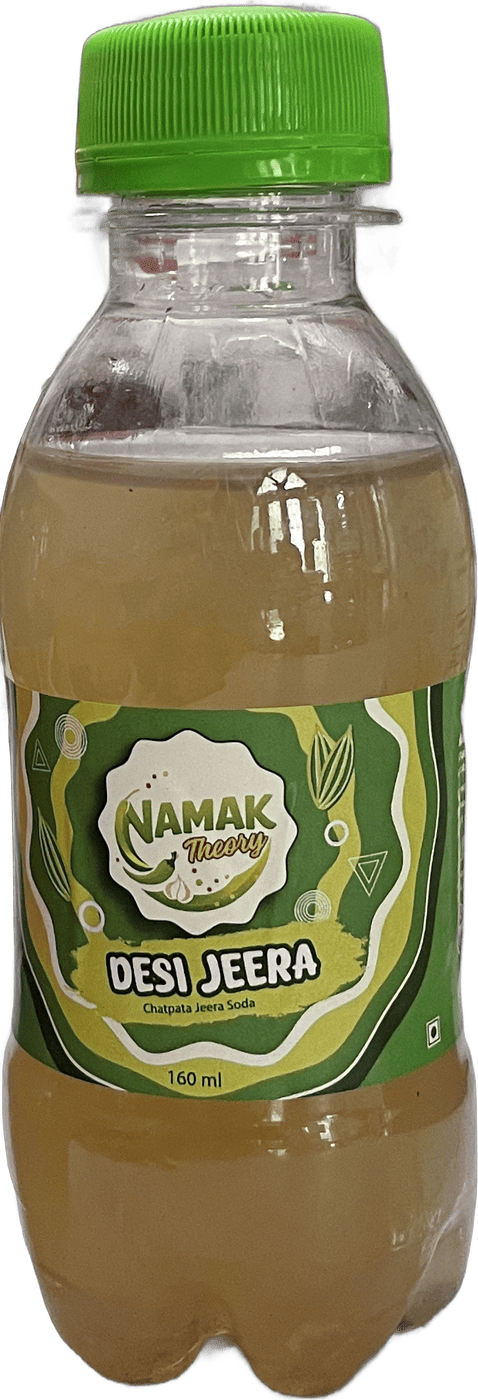 Formula 01 · Live
Desi Jeera
Roasted cumin, rock salt, chatpata finish. 160ml, ₹10 MRP. The one for after lunch, after dinner, and every other excuse in between.
Full jeera soda guide →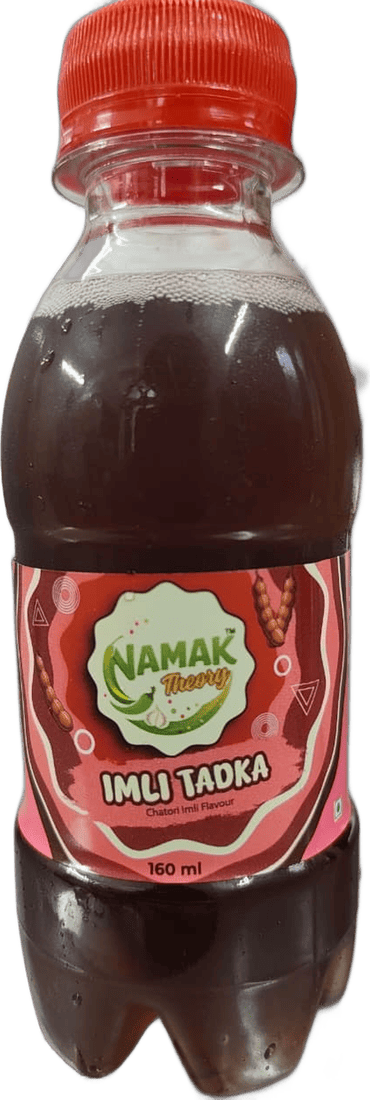 Formula 02 · Live
Imli Tadka
Imli-forward, tangy and bold. 160ml, ₹10 MRP. The one that makes you reach for a second before you've finished the first.
See full range →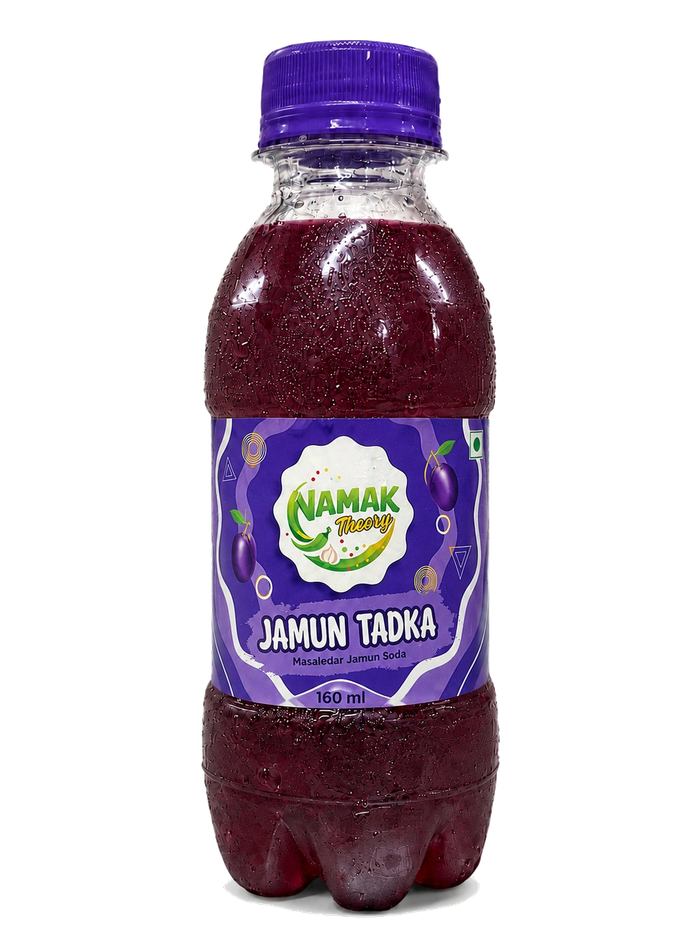 Formula 03 · Brewing
Jamun Tadka
Masaledar jamun soda — the next formula, currently being developed. Follow @namak_theory for the launch.
Where Jeera Soda Fits in Lucknow's Food Culture
Lucknow is an Awadhi city — and Awadhi food culture has always had a place for a tangy, masala-forward drink alongside its heavier dishes. The after-meal cooler is a habit, not a novelty. Roasted jeera with black salt and a squeeze of lime has been the digestive of choice in Lucknow's households and restaurants for generations.
The difference now is packaging. Instead of something your cook prepares or something you only get at a chaat counter, NAMAK Theory puts that same flavour in a cold, carbonated, ready-to-drink bottle that's as easy to stock in a kirana as any other soft drink.
Lucknow by Neighbourhood — Where Masala Soda Has a Natural Home
Aminabad & Chowk — Street Food Culture
Aminabad's galiyan are built around chaat, tikki and golgappas — and a cold chatpata soda pairs naturally with all three. NAMAK Theory's Desi Jeera is built for exactly this pairing. A ₹10 bottle next to a ₹30 plate of papdi chaat is a natural cross-sell.
Hazratganj & Lalbagh — Evening Crowd
Hazratganj's evening foot traffic — students, professionals, families — is a strong market for a branded, packaged cold drink that isn't a cola. The mix of cafes, grocery stores and street stalls creates multiple channel options for a jeera soda that looks right on a modern shelf.
Gomti Nagar & IT Corridor — Post-Lunch Market
The office canteen and pantry market in Gomti Nagar's corporate belt wants something that feels natural after a meal — not sweet like a cola, but refreshing. Desi Jeera and Imli Tadka both sit in this "after-meal, savoury-fizzy" territory that has no good existing option in the ₹10–20 bracket.
University Belt — BBAU, LU, KGMU, IIM
Campus canteens, hostel mess counters and the tea stall economy around Lucknow's university clusters are price-sensitive and high-volume. A ₹10 branded masala soda competes directly with cola at this price point — and wins on flavour novelty alone in a market that's already bored of the same options.
Alambagh & Transport Hubs
Post-commute, post-travel: a cold, tangy, jeera-masala drink hits differently after time on a bus or auto. Alambagh's transit density and the inter-state traveller traffic at Lucknow's bus terminals are natural distribution points.
About NAMAK Theory — Lucknow's DPIIT-Recognized Masala Soda Brand
NAMAK Theory is a brand of Namak Concept Pvt. Ltd., a DPIIT-recognized, women-led FMCG startup based in Lucknow, UP. The company's formulas are built around traditional North Indian flavour profiles — jeera, imli, jamun — bottled for modern retail without losing what makes them work.
Being made locally isn't just a story. It means fresher product, shorter supply chains, lower distribution costs to Lucknow's retail network, and a brand that's accountable to the city it claims to represent.